3 Key Ground Risks That Can Cause Headaches on UK Sites
Ground risks which are commonly encountered on UK sites include:\
-
Chemical attack on building materials by the ground beneath
-
Ground conditions that are unstable or haven't been properly compacted
-
Contaminated soils and made ground - not to mention interaction with groundwater
-
Long term durability & performance risks - along with construction sequencing difficulties due to variable ground conditions
Sulphate Attack in Building - A Hidden Timebomb
Sulphates turn up naturally in some soils & groundwater - but they can also result from old industrial activity. When sulphates come into contact with concrete, they can cause a whole range of problems including expansion, cracking & long term deterioration - and the damage can take years to become apparent.
This type of ground risk links the chemistry of the soil to the performance of the building materials. The trouble is that by the time the damage shows up, the cost of putting things right can be in the high thousands.
Compaction and Ground Stability - A Major Concern
Soil compaction affects how loads are transferred from a building into the ground. Poor compaction can lead to settlement & uneven movement - especially in made ground, fill & reworked soils.
Compaction issues might not cause structural failure right away, but they can lead to a whole series of problems including floors going out of shape, finishes cracking & services being disrupted. These effects can turn up months or even years after construction is finished.
Ground Contamination & Made Ground - A Toxic Legacy
Ground contamination is a major problem in the UK - and it often comes from historic land uses like industrial processes, waste disposal or fuel storage. Contaminants can include hydrocarbons, heavy metals & gases. Made ground often accompanies contamination & can introduce additional uncertainty.
Ground contamination can pose a range of problems including health risks for workers, damage to materials & additional costs for waste disposal. In some cases, contaminants can even migrate off site.
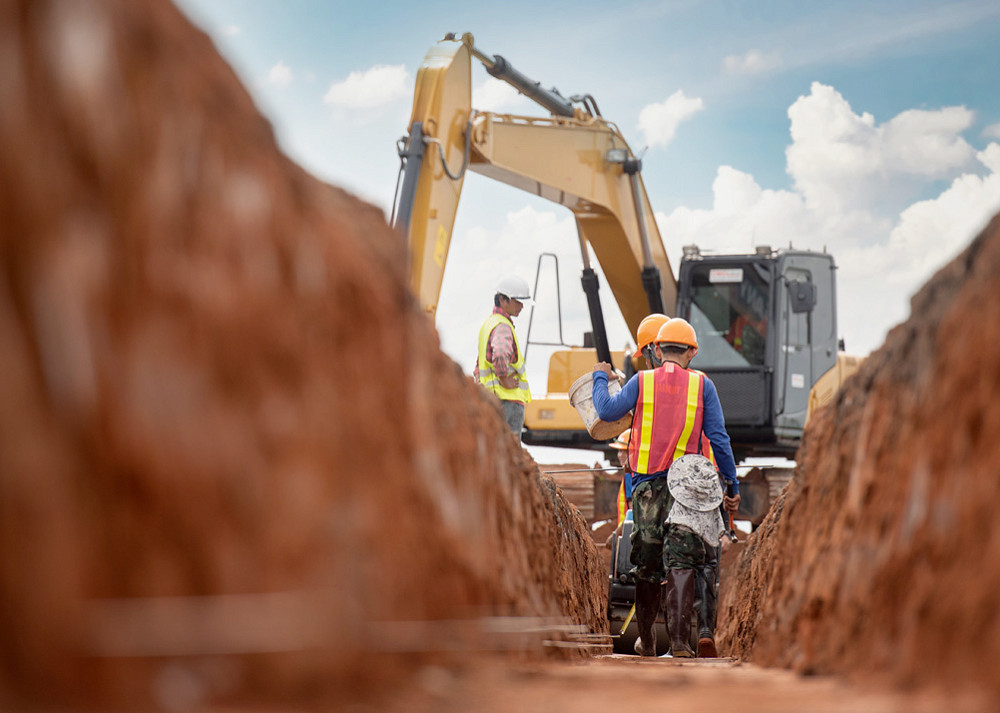
How Ground Risks Affect Design and Construction - from Start to Finish
Ground risks can have a massive impact on a project from start to finish. The chemistry of the soil can affect what materials to use & how to detail the foundations, while ground stability & compaction can influence the design & sequencing of construction works.
When ground risks aren't managed properly, they can have a massive impact on a project's programme & budget. Delays & cost overruns can become the norm.
Identifying Ground Risk Early On - The Key to Success
Identifying ground risks early on requires carrying out a site investigation & testing that's proportional to the project. A desk-based review can provide context - but site specific data is essential to confirm the actual ground conditions. The timing of the investigation is critical because finding out late on can be a nightmare.
The aim isn't to eliminate all uncertainty - it's to reduce it to a level where you can make informed decisions. Clear findings should be recorded in a geotechnical report which sets out the risks, assumptions & recommended actions.
Reducing Risk Through Smart Mitigation
Ground risk can often be reduced through targeted & proportionate measures. These include:\
-
Defining the investigation scope so it matches the project risk
-
Choosing materials that are compatible with ground chemistry
-
Improving or replacing unsuitable ground where necessary
-
Applying construction controls to manage compaction
-
Monitoring conditions where behaviour may change over time
When it comes to mitigation, it's generally better to plan ahead rather than to just react & try to sort out problems when they arise.
Residential, Commercial and Infrastructure Contexts
Ground risk affects all types of projects, but the consequences can be different. Residential developments may face durability & movement issues that affect the occupants, while commercial projects may experience operational disruption or increased maintenance liabilities.
Infrastructure schemes can have the most severe consequences due to their footprint & load. In all contexts, understanding ground risk is essential to taking a proportionate response rather than over-engineering.
Common Misconceptions About Ground Risk
One common misconception is that ground problems would already be visible on site. But many issues take years to develop. Another misconception is that ground risk only affects large sites. But even small developments can face a disproportionately greater impact when issues turn up.
A further misconception is that concrete is always resistant. Material performance depends on being compatible with the ground conditions. Making assumptions without evidence only increases risk - rather than reducing it.
Final Considerations
Ground-related issues are still one of the biggest cost drivers and causes of delays in construction projects. By identifying and getting on top of any ground related risks early on , architects, contractors and engineers can end up with safer, more predictable, and more cost effective projects which don't suffer from all the unnecessary delays and disruption that can come from ignoring these issues.