Key Takeaways
- A site investigation identifies ground conditions and ground risk for a specific site.
- Investigations are commonly required for foundations, drainage, earthworks, and planning support.
- Typical stages include desk study, site walkover, and intrusive investigation where needed.
- Common risks include weak ground, groundwater, contamination, gas, and slope instability.
- Investigation data improves cost certainty and reduces programme risk.
- Designers rely on testing results to select foundation design and earthworks strategy.
- All investigations have limitations because coverage is selective and assumptions apply.
With these principles established, it helps to define what a site investigation includes.
Site Investigation
A site investigation establishes the characteristics of soil and rock on a site and identifies risks that could affect design and construction. The investigation supports planning, design development, and construction phase risk management. The process can combine a ground investigation with geotechnical investigation and contamination assessment where relevant. The goal is to provide reliable evidence rather than assumptions.
A site investigation supports design decisions in practical ways. Engineers use the findings to select foundation design, assess settlement risk, and manage groundwater. Contractors use the findings to plan earthworks and temporary works. Developers use the findings to improve cost certainty and reduce programme delays.
What a site investigation typically covers (though not limited to)
- desk study and site walkover findings
- soil strata and made ground identification
- groundwater level and seasonal variation risk
- bearing capacity and settlement assessment inputs
- contamination assessment screening and sampling plan
- gas risk indicators such as methane or carbon dioxide
- earthworks suitability, including cut and fill considerations
- slope stability risks and retaining wall implications
- recommendations for foundation design and drainage strategy
- construction constraints and mitigation measures
This scope varies by project type and risk profile, so it is useful to explain how investigation scope is set.
Scope of a Site Investigation
Scope depends on what the project needs to prove and what risks the site may contain. A small residential extension may require limited soil investigation to confirm bearing strata. A commercial development may require a broader geotechnical investigation because loads, pavement areas, and drainage demands are higher. Infrastructure schemes often require longer corridors of investigation because ground conditions can vary quickly over distance.
Ground risks also depend on site history. Brownfield land can carry contamination, made ground, and buried obstructions. Sites near watercourses may face high groundwater or flooding interaction. Sloping sites may present stability concerns and increased earthworks complexity.
Factors that influence investigation scope
- building type, load levels, and layout
- foundation design options and sensitivity to settlement
- presence of made ground or historic land use
- groundwater depth and drainage requirements
- contamination assessment requirements and risk classification
- programme risk and construction sequencing constraints
- nearby structures, services, and access limitations
Once scope is defined, methods can be selected to gather the required evidence.
Site Investigation Methods
A ground investigation typically combines non-intrusive and intrusive approaches. Non-intrusive methods help plan intrusive works efficiently. Intrusive methods provide the measured data needed for design. In practice, investigation phases often begin with desk-based work and progress to sampling and testing.
Non-Intrusive Investigation Methods
A desk study reviews existing information about the site. The desk study may include historic mapping, geological maps, and records of previous use. The desk study helps identify potential contamination, made ground, and groundwater sensitivity.
A site walkover provides observations that mapping cannot confirm. The surveyor or engineer checks surface conditions, drainage routes, evidence of fill, and signs of instability. The walkover also identifies access and safety constraints for intrusive works.
Geophysical surveys can support decision-making where subsurface features must be mapped at a high level. Geophysics can help identify anomalies such as voids, buried structures, or changes in ground profile. Geophysics does not replace intrusive investigation, but it can improve targeting and reduce unnecessary drilling.
These non-intrusive steps then inform the intrusive programme.
Intrusive Investigation Methods
Boreholes provide deep information about soil strata and rock. Boreholes allow sampling and groundwater monitoring. Boreholes can also support in-situ testing such as standard penetration testing where specified.
Trial pits provide shallow, accessible information. Trial pits are useful for observing made ground, shallow foundations, and services conflicts. Trial pits can support bulk sampling and visual logging.
Window sampling provides small-diameter sampling using driven or percussive tools. Window sampling suits light-access sites and rapid programmes. It can provide useful stratigraphy in softer ground.
In-situ testing provides measurements in the ground. These tests can support strength and stiffness assumptions used in geotechnical engineering. Laboratory testing then confirms key properties such as moisture content, plasticity, strength, and contamination levels.
These methods generate the data that identifies ground risk and informs design.
Ground Risks Identified Through Investigation
A site investigation exists to identify risk early. Ground risks can affect safety, compliance, and cost. The key risks include variable ground, contamination, groundwater, gas, and instability.
Weak or variable ground increases settlement risk. Variable strata can cause differential settlement, which can lead to cracking and deflection. Made ground can contain debris, voids, and low strength zones.
Contamination can introduce health and environmental constraints. Hydrocarbons and heavy metals can trigger remediation requirements. Contamination can also affect disposal routes and earthworks cost.
Groundwater affects excavation stability and drainage design. A high water table can increase dewatering needs and delay foundation installation. Groundwater can also influence basement waterproofing requirements.
Gas risk can affect enclosed spaces and services ducts. Methane and carbon dioxide can require protective measures. Radon can also be relevant in some locations.
Slope instability can affect buildability and retaining wall requirements. Instability risk increases earthworks complexity and programme risk.
Typical ground risks and their consequences
- weak ground → increased settlement and foundation redesign
- made ground → unpredictable bearing capacity and obstructions
- groundwater → dewatering, excavation risk, and drainage constraints
- contamination → remediation, disposal controls, and programme impact
- gas risk → protective measures and ventilation requirements
- slope instability → retaining solutions and higher construction cost
These risks then feed into design decisions and risk reduction actions.
Risk Reduction and Design Decisions
Investigation findings reduce uncertainty by replacing assumptions with measured data. Designers use soil strata logs and test results to select safe foundation design. The findings can support shallow foundations, piled foundations, or ground improvement where appropriate. The data also informs settlement checks and bearing capacity calculations.
Earthworks strategy depends on soil suitability and contamination status. A site investigation can identify reusable material and unsuitable material. This supports cut and fill balance and disposal planning. It also supports a risk register approach by documenting uncertainties and controls.
Groundwater information supports drainage and groundwater control measures. Designers can plan attenuation, infiltration feasibility, and construction dewatering requirements. Where contamination exists, the findings support remediation and mitigation decisions that reduce long-term exposure risk.
How investigation findings reduce uncertainty
- confirms soil investigation parameters for foundation design
- quantifies settlement risk and variability across the site
- identifies contamination assessment requirements early
- reduces construction phase risk through clearer ground models
- improves cost certainty by defining earthworks and disposal needs
To use this data effectively, the project team needs a clear report.
Site Investigation Reports
A site investigation report compiles observations, test results, and interpretations into usable guidance. Designers and contractors rely on the report to justify design assumptions and plan construction activities. The report should state methods, locations, and limitations clearly. The report should also define assumptions and provide recommendations aligned to project scope.
Reports are not perfect predictors because sampling is selective. Ground conditions can vary between boreholes or trial pits. The report must therefore present uncertainty transparently. Good reporting links uncertainty to risk controls and next steps.
Key sections within a site investigation report
- scope, specification, and investigation approach
- desk study and site walkover findings
- ground model and soil strata logs
- groundwater observations and monitoring results
- laboratory testing results
- contamination assessment results and screening conclusions
- geotechnical parameters and design recommendations
- limitations, assumptions, and further work guidance
Timing also matters because many projects require phased investigation.
Timing and Phasing
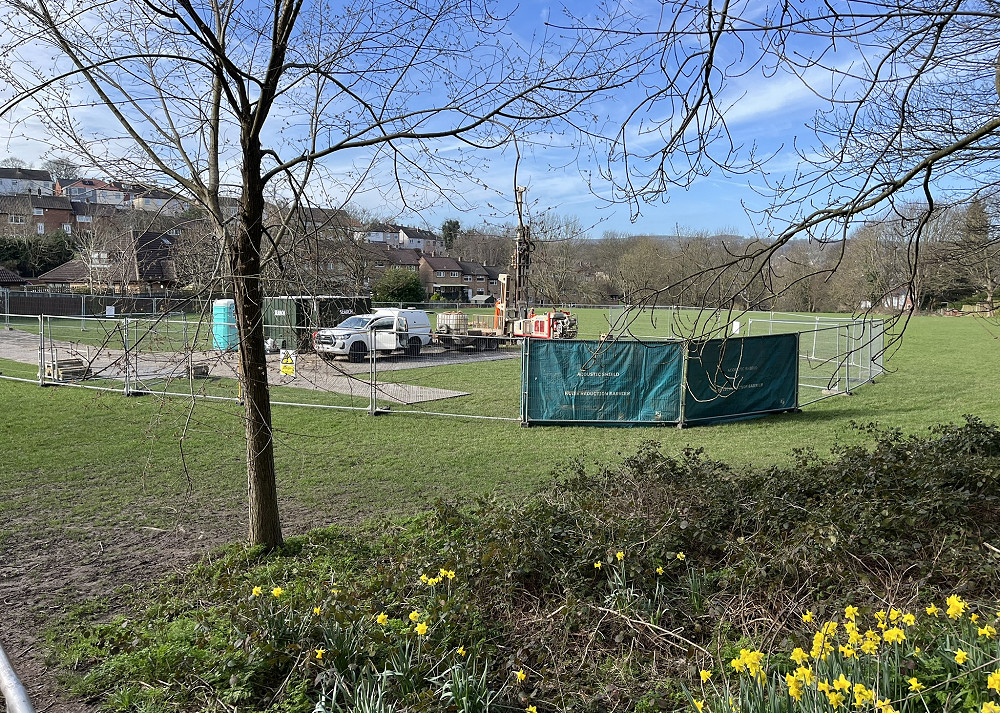
Investigations are often phased because early-stage information guides later work. A preliminary investigation may support feasibility and planning. A detailed investigation may support final foundation design and construction sequencing. Phasing helps avoid over-investigation early while still controlling risk.
Early investigations can identify “red flag” risks such as contamination, high groundwater, or thick made ground. Detailed investigations then refine parameters for structural calculations and earthworks design. This sequence supports better programme control.
When to commission a site investigation
- before selecting a foundation design strategy
- before finalising budget cost plans
- before committing to earthworks and drainage concepts
- before purchase on higher-risk or brownfield sites
- before major refurbishment or change of use
- before pricing works where ground risk drives cost
Phasing works best when teams understand common misconceptions.
Common Misconceptions
“Nearby sites are the same” is a common misconception. Ground conditions can change over short distances, especially in made ground or variable geology. A desk study cannot confirm bearing capacity or contamination levels on its own. A site can look flat and still contain weak layers, high groundwater, or buried obstructions.
“An investigation guarantees no problems” is another misconception. A site investigation reduces uncertainty, but it cannot remove all risk because sampling coverage is limited. The correct goal is risk identification and proportionate mitigation.
These clarifications support better decision-making and more realistic expectations.
Conclusion
A site investigation is a key risk management step because it confirms ground conditions and identifies issues that can affect design, cost, and programme. The findings support foundation design, drainage planning, earthworks strategy, and contamination remediation where needed. Early and proportionate investigations reduce construction phase risk and avoid late redesign. Related topics often include geotechnical engineering, foundation design, and drainage strategy, which build on the evidence produced by a site investigation.