Key Takeaways
- A topographical survey captures site levels and physical features in one coordinated dataset
- It is typically required before design, planning, or drainage work begins
- Surveys record both natural and man-made features, including levels and constraints
- Data is collected using modern surveying equipment and control points
- Outputs support CAD and BIM workflows for design teams
- Accuracy and specification directly affect design reliability
- Clear briefing improves survey quality, cost certainty, and programme outcomes
With this foundation established, it is important to understand what a topographical survey actually includes.
Topographical Survey
A topographical survey is a type of land survey that records the three-dimensional position of ground levels and site features. It differs from a boundary survey or utilities survey because it focuses on spatial context rather than ownership or buried services. Designers use the survey as the base drawing for all subsequent work.
What a topographical survey captures
A typical site survey records the following elements:
- ground contours and spot levels
- slopes, gradients, and changes in level
- building footprints and structures
- roads, kerbs, and hardstanding
- manholes, gullies, and visible drainage runs
- trees, vegetation, and soft landscaping
- fences, walls, and access points
- watercourses, culverts, and ditches
These features form the factual baseline for design decisions. Without this data, assumptions replace evidence.
Purpose
The primary purpose of a topographical survey is to inform decision-making at an early stage. Designers use accurate site levels to assess feasibility, plan drainage falls, and coordinate layouts. Planners rely on survey data to understand context, access, and constraints.
In practice, survey information supports:
- site feasibility studies
- concept and detailed design
- planning submissions
- drainage and flood risk work
- construction sequencing
When a topographical survey is typically required
A measured survey is usually needed when:
- developing or extending buildings
- altering site levels or access
- designing drainage or SuDS
- submitting planning applications
- coordinating multi-disciplinary design
As projects progress, early survey data reduces redesign and programme delays.
Process
The topographic survey process follows a structured workflow to ensure accuracy and consistency. Each stage builds confidence in the final outputs.
First, the surveyor agrees a brief and specification. This defines coverage, accuracy, and deliverables. Clear scope prevents gaps or duplication later.
Next, the surveyor carries out site reconnaissance. This step identifies access constraints, vegetation, and safety considerations.
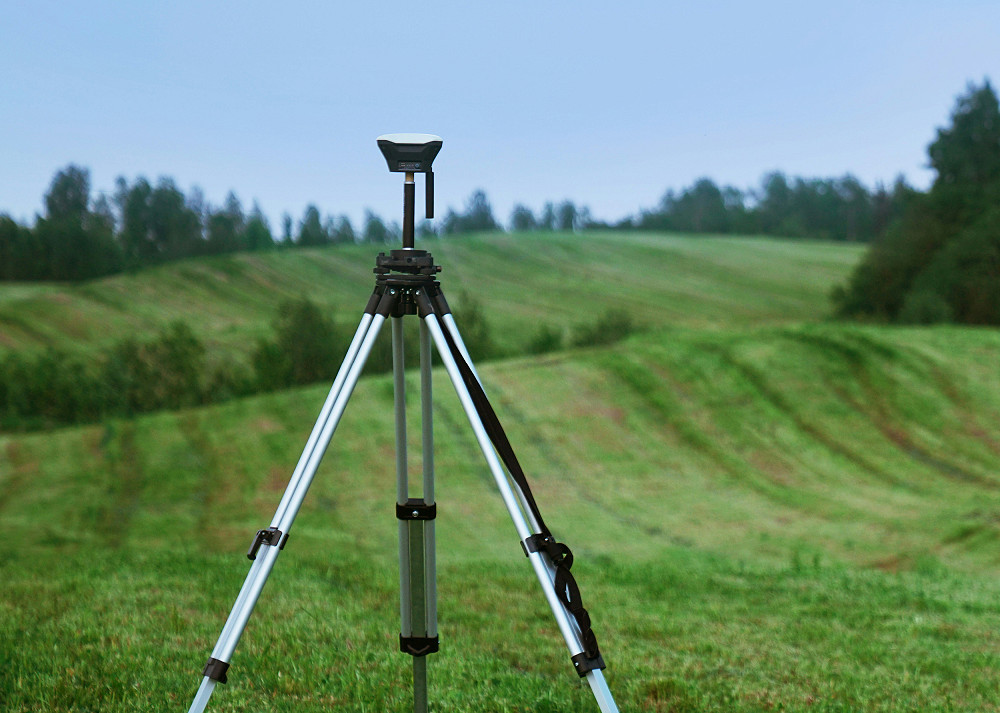
Control points are then established using a survey control network. These reference points align the survey to a coordinate system and Ordnance Survey datum. Data capture follows using total stations, GNSS/GPS equipment, laser scanning, or drone survey methods where appropriate.
Finally, quality assurance checks verify accuracy before drafting and issue.
Information to provide before the survey starts
To support efficient delivery, clients should provide:
- site address and boundary information
- required accuracy or tolerance
- intended use of the data
- preferred file formats
- known access restrictions
Good briefing improves both programme and cost certainty.
Outputs
Survey outputs translate field data into usable information for project teams. These outputs must be clear, consistent, and compatible with design software.
Typical deliverables and formats
A standard levels survey package may include:
- CAD drawings in DWG format
- 3D models for BIM workflows
- contour plans and spot level schedules
- metadata and survey notes
These deliverables support design coordination across disciplines.
Common topographical survey outputs and how they are used
Common topographical survey outputs serve different users and support different project decisions:
- Contour plans - show ground shape and slopes, used by architects and engineers to inform levels strategy and drainage falls.
- Spot levels - provide precise height points, used by engineers to set finished floor levels.
- Feature plans - record built and natural features, used by planners and designers to determine layout and access.
- 3D models - show spatial relationships, used by BIM teams for clash detection.
- Survey notes - detail accuracy and datum information, used by project managers for risk control.
Each output supports different decisions, but all rely on the same accurate base data.
Accuracy and Specifications
Accuracy defines how closely the survey reflects real-world conditions. Specification sets acceptable tolerances and detail levels. Together, they determine reliability.
Site conditions affect results. Dense vegetation, limited access, weather, and line-of-sight constraints can influence survey quality. A clear specification manages these risks.
Questions to ask a surveying provider
Before appointing a surveyor, consider asking:
- what accuracy standard will be used
- how control points will be established
- what quality checks are included
- how site constraints are managed
- what formats will be delivered
Clear answers reduce uncertainty and rework.
Topographical Survey vs Other Survey Types
A topographical survey often sits alongside other surveys, but each serves a different purpose.
A boundary survey focuses on legal extents. A measured building survey records internal layouts. A utilities survey locates buried services. An as-built survey verifies completed works.
Avoiding scope gaps and duplicated surveys
Clear coordination avoids:
- missing information between surveys
- repeated site visits
- conflicting datasets
Early planning ensures surveys complement rather than overlap.
Practical Examples by Project Type
Different projects use survey data in different ways.
For residential development, survey levels inform garden gradients, access, and drainage. Building footprint surveys help position extensions accurately.
For commercial sites, survey data supports large-scale earthworks, access routes, and service coordination.
For highways or infrastructure corridors, continuous level data guides alignment, gradients, and safety design.
In each case, accurate survey information underpins safe and efficient delivery.
Conclusion
A topographical survey provides the factual foundation for design, planning, and construction. By accurately recording site levels and features, it reduces risk, improves coordination, and supports informed decisions across project stages. Understanding purpose, process, and outputs helps teams brief surveys correctly and use the data effectively. Related next-step topics often include utilities surveys, drainage design, and ground investigations.